
San Francisco Therapist for Highly Sensitive People & Empaths
Who I Work With
You've always thought about things differently: longer, deeper, and with more complexity than the people around you. You're the one who wants to talk about what an interaction actually meant, twenty minutes after everyone else has already moved on from the conversation.
You've stayed up questioning the point of your job, your relationship, your trajectory, while people next to you seemed genuinely fine just getting by. Even as a kid, you were probably asking why we're here, what happens when we die, whether anyone else feels as much as you do, long before you had the word “existential.”
That kind of mind doesn't turn off. It's part of why you notice everything, why you feel things at a level other people don't seem to register, why a two-minute conversation can occupy you for a week. It's also, quietly, a lonely place to live, because thinking and feeling that intensely around people who don't tends to teach you to shrink it down, to make yourself smaller and more palatable, even before it becomes a conscious choice.
You've probably had a word for this that never quite fit either: anxious, empath, sensitive, gifted, an old soul, intense. What those words were actually trying to express is a nervous system wired for more: more depth, more complexity, more intensity, more awareness, in a world built on disconnection.
Calm on the Outside
People describe you as calm while your nervous system feels like it's sprinting. What they don't see is that you use every bit of your energy tracking, noticing, anticipating, empathizing, planning responses, and to your best ability managing the people around you.
That cost shows up in your relationships, too. They never quite feel reciprocal. You do far more listening than sharing, more holding than being held, because it's always felt safer to manage how you're perceived than to risk being fully seen.
You've been praised, even celebrated, for how much you take on, how capable you are.
You became an expert at deciphering what was expected of you and you made sure to check those boxes. You became the kid your family never had to worry about.
But somewhere along the way your anxiety started to rise.
Your jaw is tight five hours into a day you don't remember clenching it. Your brain wakes you up at 4am replaying the conversation, not what they said, what you said, scanning for the moment you came across wrong. You sit in the car silent for the first ten minutes after a social event, just to feel your nervous system come back down. Maybe your 9-5 job feels like a slow death by a thousand paper cuts.
There's a moment where this stops working. Sometimes it's gradual. Sometimes it hits you like a panic attack. Either way, you've noticed a creeping anxiety, exhaustion, and even existential dread that feels impossible to untangle or push through. Your body is showing the cracks, and despite your ability to rationalize, you don't know how to think yourself out of it anymore.

“Anxiety" never felt like it captured the whole picture.
This didn't come out of nowhere.
I work with thoughtful, deeply reflective women who've spent much of their lives adapting to other people's needs, other people's expectations, and environments where being themselves wasn't safe. Whether that happened because of childhood trauma, emotionally immature caregivers, chronic invalidation, oppression, or neurodivergence, the result is often surprisingly similar. Little by little, you lose trust in yourself. Your relationship to your own body, desires, needs, emotions becomes obscured by managing other people's perceptions of you.
Maybe you've already been to therapy. You understood the tools, nodded along, tried to apply them. You could probably write the self-help book by now. But it didn't change how you felt, not in your body, your relationships, and not in the quiet moments alone. That's often because the work stayed in your head and didn’t reach your body. Insight alone doesn't touch the places that need healing.
This is where the work begins.
It's okay if you cry. It's okay if you feel stuck. It's okay if you don't have the words yet. There's no rush here, and no pressure to have it figured out before we start.

I help deep-feeling women reconnect with their bodies, their voices, and the parts of themselves they learned to manage down, so they can build a life that's actually theirs.
My Approach: Somatic Therapy, EMDR & Parts Work
It can be hard at first to learn to relate to ourselves in new ways, and that's why it's helpful to partner with a therapist whose brain works like yours.
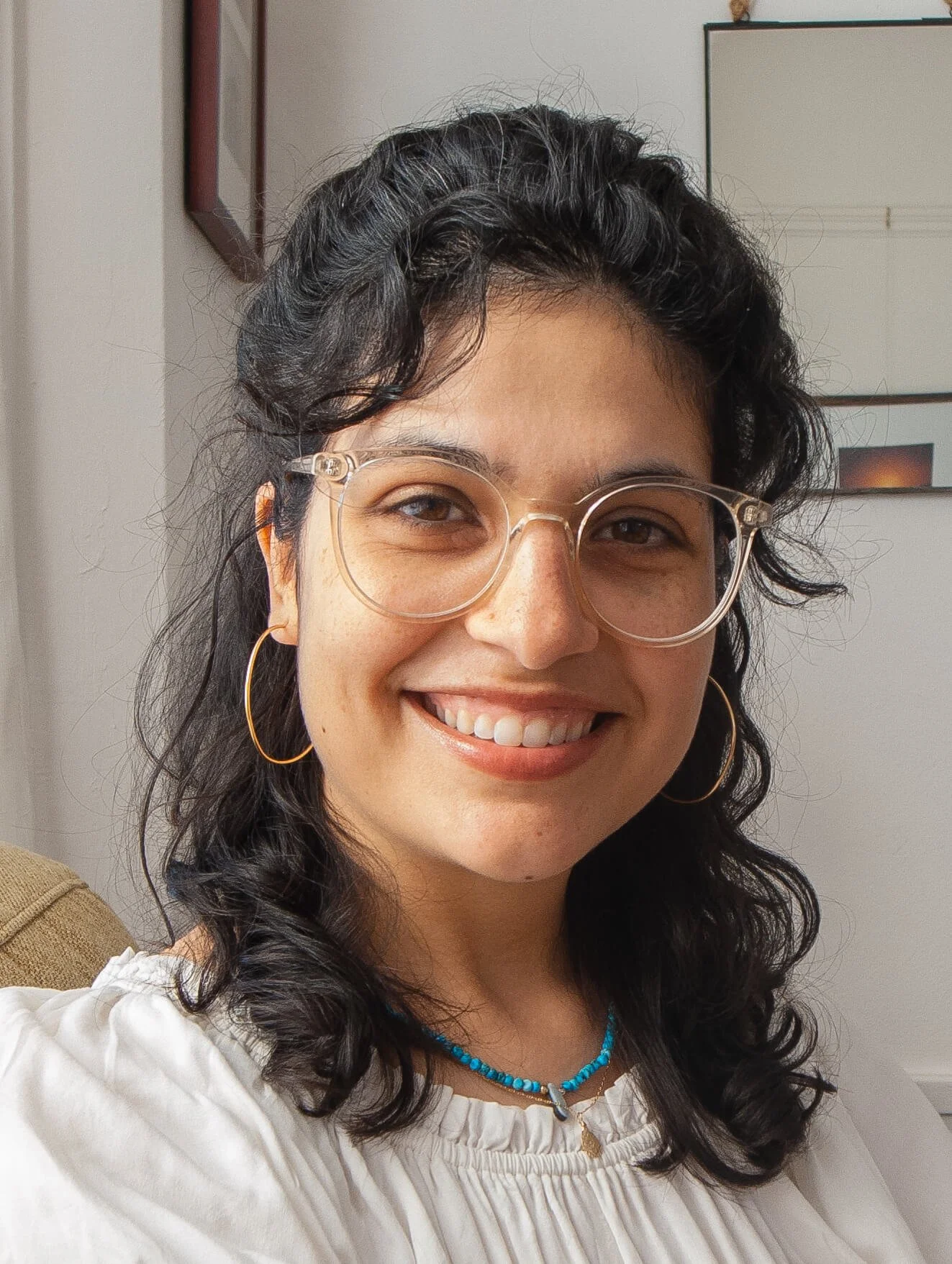
I’m Sarah (she/her). I'm an LMFT who has been practicing since 2018, trained in Sensorimotor Psychotherapy, EMDR, parts work (IFS), and psychodynamic therapy, so we have real tools for working with what's stored in the body as well as the mind.
Sessions are available via telehealth throughout California, with limited in-person availability in San Francisco.
I also bring lived experience as a queer, neurodivergent, mixed-race woman to this work, which means less time having to explain the basics of what it's like to move through the world. Some of that, I already understand. Together we can ask the big questions and hold the complexity of your experience: What do I actually want? What have I been carrying that was never mine to carry? Who am I when I'm not managing everyone else's experience of me?

We'll put together the story of you, from the past to the present. Together we'll draw on the body as much as the mind, work with the different parts of you that developed to keep you safe, process what still hurts, and do it all through a neuroaffirming lens that treats your nervous system as making sense, not as something broken to fix.
You start to notice the tension ease when you say what’s true instead of what’s easy. You let people see you with less editing. The parts of you that show up at work, with family, with friends, alone, start to feel like one continuous person instead of a set of careful performances.
You get to find out who you are when you're not the one holding everything together.
I'm not here to just listen and nod along. I'll be engaged and invested right there with you, helping you find the next right step.
We'll explore your experiences with curiosity, compassion, and depth. Together, we'll strengthen your relationship with yourself, reconnect you with your body and your inner knowing, and untangle the survival patterns that no longer serve you.
My hope is that you leave therapy not just with insight, but with a deeper sense of trust in yourself, more authentic relationships, and the freedom to build a life that truly fits who you are.
Coming Back to Yourself